

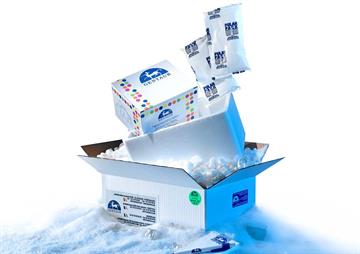
GITR:GITRL TR-FRET Assay Kit
1892.5 EUR
In Stock
quantity
Produktdetaljer
Katalognummer: 421 - 79054
Produktkategori: Företag och industri > Vetenskap och laboratorium
Gentaur
Storlek: 384 rxns.
Parameters
| Storage and shipping | Shipping conditions: -80°C; Storage conditions: Stable at least 6 months from date of receipt, when stored as directed. Kit components require different storage conditions. Be sure to store each component at the proper temperature upon arrival.; |
|---|---|
| Storage and shipping | With |
79101-1
RANK:RANKL TR-FRET Assay
The RANK:RANKL TR-FRET Assay is designed to measure the inhibition of RANK binding to RANKL. This FRET-based assay requires no time-consuming washing steps, making it especially suitable for high throughput screening applications. The assay procedure is straightforward and simple; a sample containing biotinylated RANK, RANKL, anti-His Tb donor, dye-labeled acceptor, and an inhibitor is incubated for one hour. Then, the fluorescence intensity is measured using a fluorescence reader.
1792.5 €
79101-2
RANK:RANKL TR-FRET Assay
The RANK:RANKL TR-FRET Assay is designed to measure the inhibition of RANK binding to RANKL in a homogeneous 384 reaction format. This FRET-based assay requires no time-consuming washing steps, making it especially suitable for high throughput screening applications. The assay procedure is straightforward and simple; a sample containing biotinylated RANK, RANKL, anti-His Tb donor, dye-labeled acceptor, and an inhibitor is incubated for two hours. Then, the fluorescence intensity is measured using a fluorescence reader.
1792.5 €
32618
ATAD2A TR-FRET Assay Kit
The ATAD2A TR-FRET Assay Kit is designed to measure the inhibition_x000D_of ATAD2A binding to its substrate in a homogeneous 384 reaction format. This FRETbased_x000D_assay requires no time-consuming washing steps, making it especially suitable for_x000D_high throughput screening applications. The assay procedure is straightforward and_x000D_simple; a sample containing terbium-labeled donor, dye-labeled acceptor, ATAD2A,_x000D_substrate, and an inhibitor is incubated for sixty minutes. Then, the fluorescence_x000D_intensity is measured using a fluorescence reader.
915 €
78302
MDM2 intrachain TR-FRET Assay Kit
Covalent conjugation to ubiquitin (Ub) is one of the major post-translational modifications that regulates protein stability, function, and localization. Ubiquitination is the concerted action of three enzymes: a Ub-activating enzyme (E1), a Ub-conjugating enzyme (E2), and a Ub ligase (E3). The specificity and efficiency of ubiquitination are largely determined by the E3 enzyme, which directs the last step of the Ub-conjugating cascade by binding to both an E2~Ub conjugate and a substrate protein. This step ensures the transfer of Ub from E2~Ub to the substrate, leading to its mono- or poly-ubiquitination.The human Mouse double minute 2 homolog (MDM2) is an E3 Ub ligase and the master regulator of tumor suppressor proteins such as p53. Thus, high activity of MDM2 can promote tumor formation by targeting tumor suppressor proteins for proteasomal degradation, enabling cancer cell survival and proliferation. That is why MDM2 is an attractive potential drug target in cancer immunotherapy. Like most E3 ligases, MDM2 ubiquitinates itself and this auto-ubiquitination stimulates MDM2 Ub ligase activity.The MDM2 intrachain TR-FRET Assay Kit is a sensitive high-throughput screening (HTS) TR-FRET Assay Kit, designed to measure MDM2 auto-ubiquitination activity in a homogeneous 384 reaction format. It utilizes a Europium cryptate-labeled Ub (donor) as well as Cy5-labeled Ub (acceptor) to complete the TR-FRET pairing. Since both the TR-FRET donor and acceptor are incorporated into poly-ubiquitin chains formed on MDM2, this FRET-based assay requires no time-consuming washing steps, making it especially suitable for HTS applications as well as real-time kinetics analyses of polyubiquitination.
2325 €
78303
SMURF1 intrachain TR-FRET Assay Kit
Covalent conjugation to ubiquitin (Ub) is one of the major post-translational modifications that regulates protein stability, function, and localization. Ubiquitination is the concerted action of three enzymes: a Ub-activating enzyme (E1), a Ub-conjugating enzyme (E2), and a Ub ligase (E3). The specificity and efficiency of ubiquitination are largely determined by the E3 enzyme, which directs the last step of the Ub-conjugating cascade by binding to both an E2~Ub conjugate and a substrate protein. This step ensures the transfer of Ub from E2~Ub to the substrate, leading to its mono- or poly-ubiquitination.The SMAD ubiquitination regulatory factor 1 (SMURF1) is a HECT-type E3 Ub ligase that regulates TGF-β/BMP pathways via ubiquitination of key signal transducers (SMAD1, SMAD2, or SMAD5), or TGF-β receptor I. SMURFs play a critical role in cell-type specification, tissue and organ development by regulating planar cell polarity signaling and convergent extension. SMURFs can also accelerate tumor progression, invasion, and metastasis as they regulate ubiquitination and subsequent proteasomal degradation of tumor-suppressing proteins including p53 as well as various cell signaling proteins. That is why SMURF1 and especially its Ub ligase activity is an attractive potential drug target in cancer immunotherapy. Like most E3 ligases, SMURF1 ubiquitinates itself.The SMURF1 intrachain TR-FRET Assay Kit is a sensitive high-throughput screening (HTS) TR-FRET Assay Kit, designed to measure SMURF1 auto-ubiquitination activity in a homogeneous 384 reaction format. It utilizes a Europium cryptate-labeled Ub (donor) as well as Cy5-labeled Ub (acceptor) to complete the TR-FRET pairing. Since both the TR-FRET donor and acceptor are incorporated into poly-ubiquitin chains formed on SMURF1, this FRET-based assay requires no time-consuming washing steps, making it especially suitable for HTS applications as well as real-time kinetics analyses of polyubiquitination.
2430 €
78304
SMURF2 intrachain TR-FRET Assay Kit
Covalent conjugation to ubiquitin (Ub) is one of the major post-translational modifications that regulates protein stability, function, and localization. Ubiquitination is the concerted action of three enzymes: a Ub-activating enzyme (E1), a Ub-conjugating enzyme (E2), and a Ub ligase (E3). The specificity and efficiency of ubiquitination are largely determined by the E3 enzyme, which directs the last step of the Ub-conjugating cascade by binding to both an E2~Ub conjugate and a substrate protein. This step ensures the transfer of Ub from E2~Ub to the substrate, leading to its mono- or poly-ubiquitination.The SMAD ubiquitination regulatory factor 2 (SMURF2) is a HECT-type E3 Ub ligase that regulates TGF-β/BMP pathways via ubiquitination of key signal transducers (SMAD1, SMAD2, or SMAD5), or TGF-β receptor I. SMURFs play a critical role in cell-type specification, tissue and organ development by regulating planar cell polarity signaling and convergent extension. SMURFs can also accelerate tumor progression, invasion, and metastasis as they regulate ubiquitination and subsequent proteasomal degradation of tumor-suppressing proteins including p53 as well as various cell signaling proteins. That is why SMURF2 and especially its Ub ligase activity is an attractive potential drug target in cancer immunotherapy. Like most E3 ligases, SMURF2 ubiquitinates itself.The SMURF2 intrachain TR-FRET Assay Kit is a sensitive high-throughput screening (HTS) TR-FRET Assay Kit, designed to measure SMURF1 auto-ubiquitination activity in a homogeneous 384 reaction format. It utilizes a Europium cryptate-labeled Ub (donor) as well as Cy5-labeled Ub (acceptor) to complete the TR-FRET pairing. Since both the TR-FRET donor and acceptor are incorporated into poly-ubiquitin chains formed on SMURF2, this FRET-based assay requires no time-consuming washing steps, making it especially suitable for HTS applications as well as real-time kinetics analyses of polyubiquitination.
2430 €
Håll dig uppdaterad! Visa tidigare publikationer

By: Author , 2 Comment
Vad är autoimmunitet?
12 mars 2026

By: Author , 2 Comment
Pepsin – vad är det och var finns det?
3 mars 2026

By: Author , 2 Comment
Katalas – ett extraordinärt enzym
30 januari 2026

By: Author , 2 Comment
Achoo! Så vad är en allergi?
12 mars 2026